
The Flowaccel Framework
The Silicon Systems Development Flow Architecture
is a development leader's framework to use as a guide.
It contains 4 pillars, tenets, practices, and capabilities that help engineering leaders deliver current commitments, manage complexity, adapt to change, integrate AI, and scale silicon systems product development.
Want to know your baseline?
The link to the assessment is below, then let's chat about the results.
Roadmaps Are Outgrowing the Systems Built to Deliver Them
Complexity and change don't show up in status meetings; they show up where engineers actually work: in design reviews, in verification runs, in the handoffs between teams that nobody owns.
Most engineering organizations put enormous effort into designing the product.
Very few put the same rigor into designing how the product gets built.
The result is predictable: programs slip, not because people aren't working hard, but because the delivery system underneath them was never designed to absorb the complexity it's now carrying.
The Four Pillars
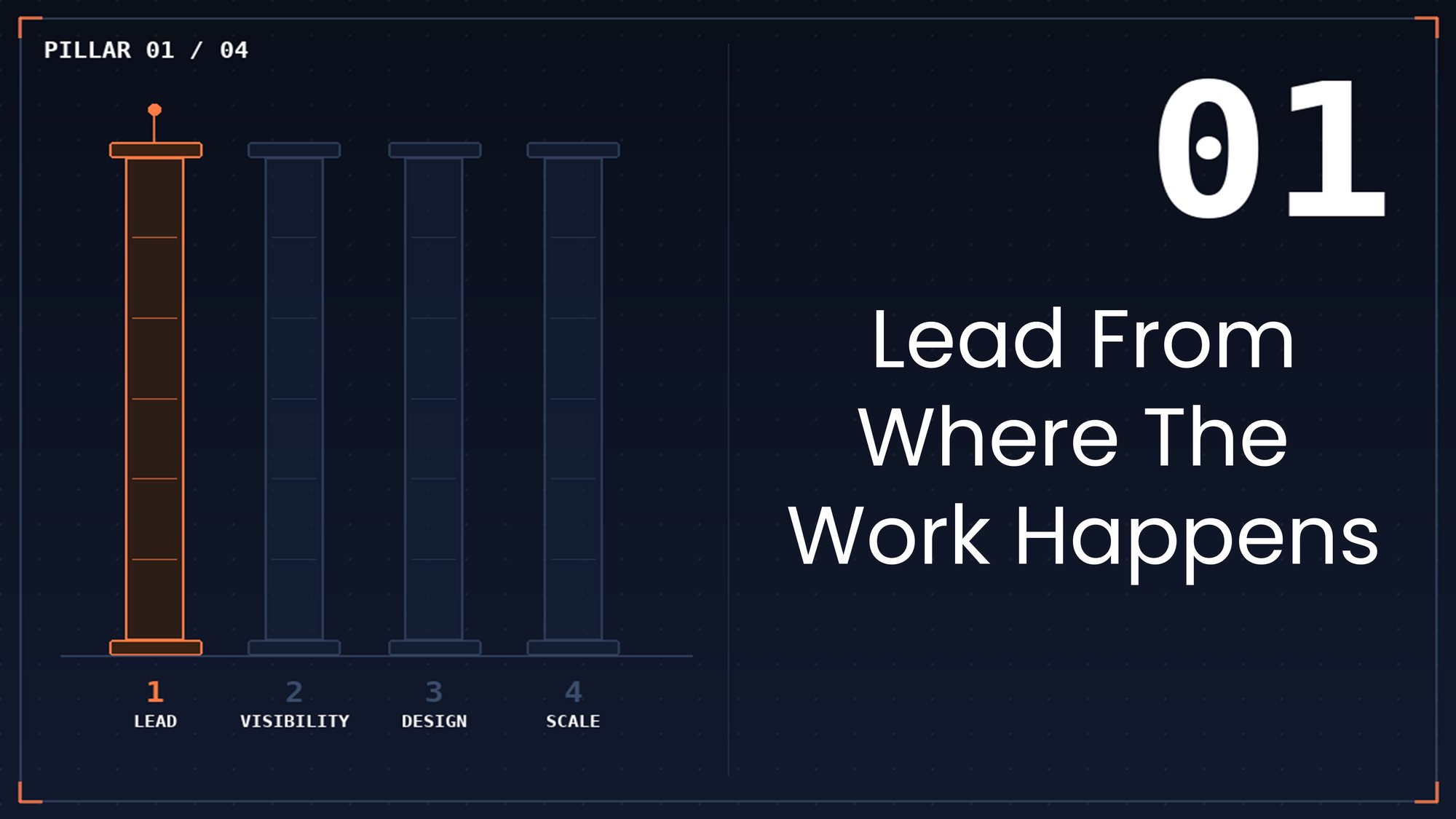
Pillar 1:
-
Complexity emerges where engineers work.
-
Leaders who understand the work firsthand are the ones equipped to improve it.
Outcome: Reality Becomes Visible
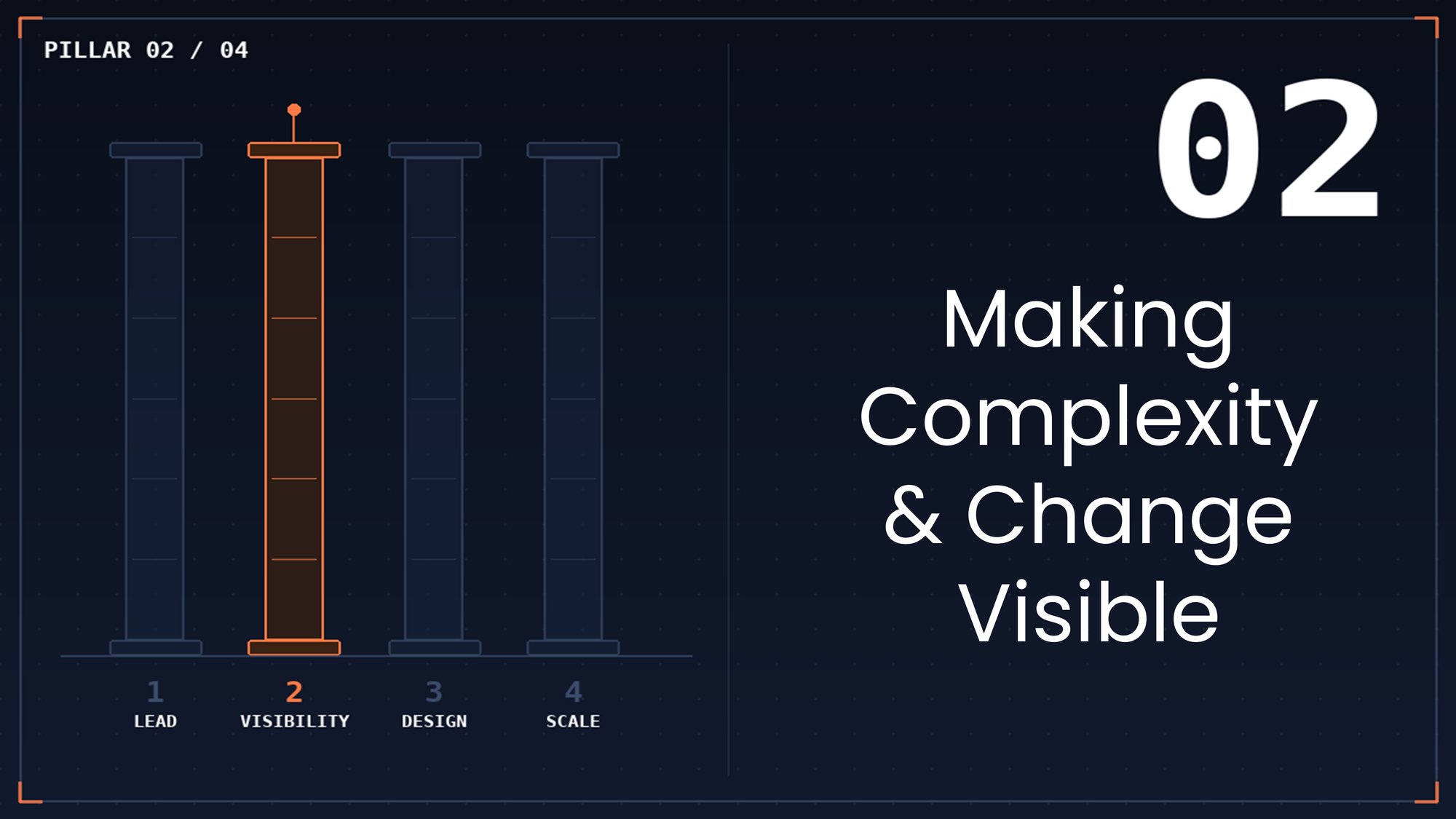
Pillar 2:
-
Hidden complexity and change create hidden risk.
-
The goal is to expose it early enough to design for it, before it becomes a milestone crisis.
Outcome: The Impact of Complexity and Change Is Better Understood
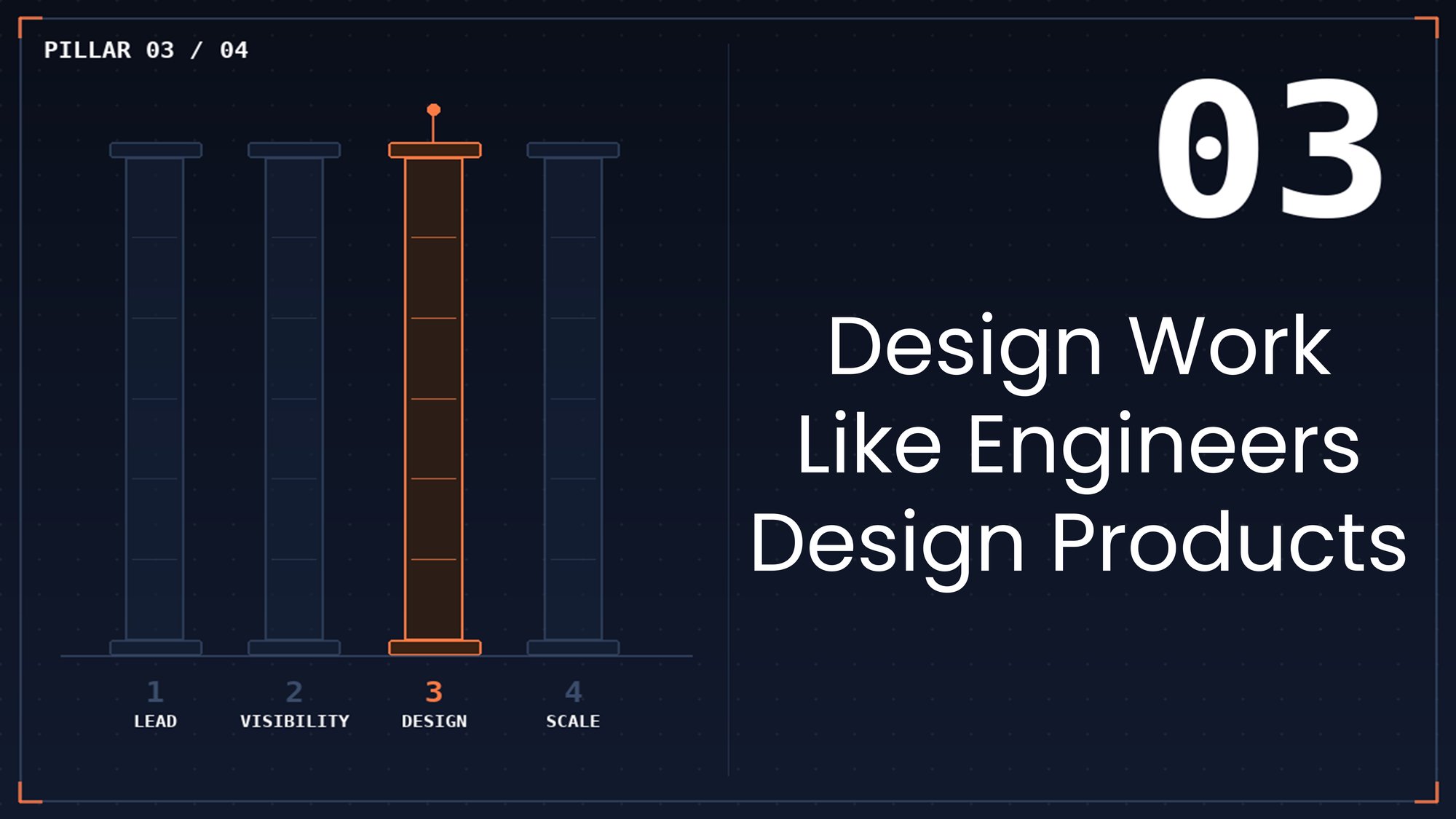
Pillar 3:
-
Engineering orgs are exceptional at designing products.
-
Few apply that same intentionality to designing the systems that build them.
Outcome: Capacity Is Created
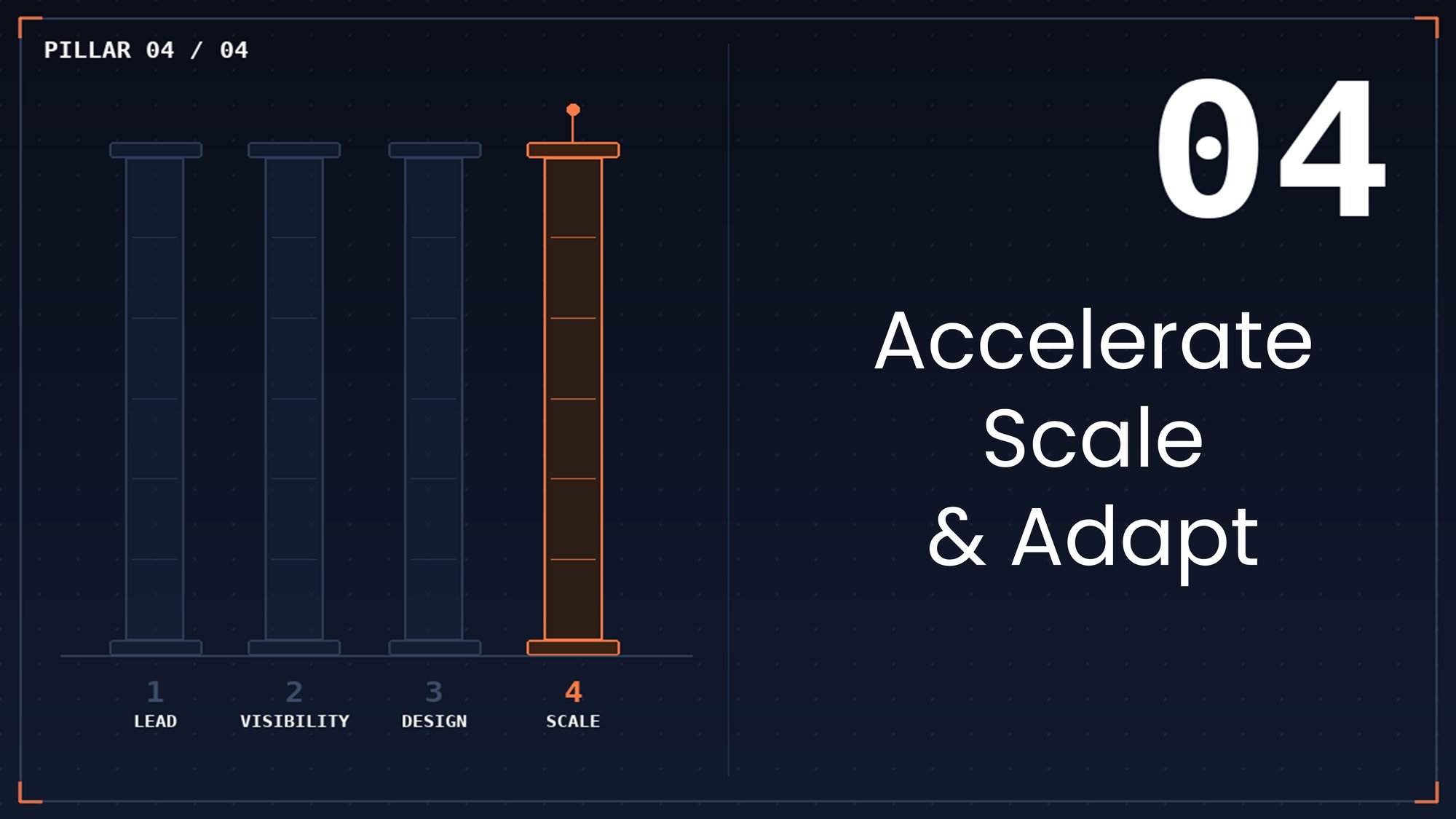
Pillar 4:
-
Operational capability only matters if it turns into sustained delivery advantage, capacity that grows faster than complexity does.
Outcome: Work Velocity, Scalable Development, and Adapting to Change
The Maturity Model
Where Does Your Organization Actually Operate?
Every organization sits somewhere on a five-level maturity curve — from Heroics,
where people compensate for a weak delivery system through sheer effort,
to Pace & Scale, where the organization continuously adapts and roadmaps scale successfully.
Most leaders have a gut sense of where they stand.
Few have measured it.
L1 Heroics → L2 Process → L3 Visibility → L4 Designed → L5 Pace & Scale
The Assessment
Let's run the diagnostic together